

While such figures might seem routine in Silicon Valley, they’re beginning to unsettle Wall Street. The concern came to a head this week after Meta released its quarterly earnings, revealing a $7 billion year-over-year increase in operating costs and nearly $20 billion in capital expenditures. This surge stems from heavy investment in AI talent and infrastructure — spending that has yet to generate meaningful revenue. When analysts sought more details, Mark Zuckerberg emphasized that the spending was far from over.
“The right thing to do is to try to accelerate this to make sure we have the compute we need — both for AI research and new developments — and to reach a different level in our core business,” Zuckerberg said on the earnings call. “Our view is that once we deploy the new models we’re building at MSL, with truly frontier capabilities you can’t find elsewhere, it will unlock a massive opportunity.”
If his intention was to calm investors, it had the opposite effect. Meta’s stock plunged by 12% by Friday’s close, erasing more than $200 billion in market value.
While stock movements can be volatile and Meta still posted a solid $20 billion in quarterly profit, this quarter marked the first visible hit from its aggressive AI spending. More troubling for investors, beyond the new data centers and high-paid AI researchers, was the lack of clarity about what those billions had actually produced.
Analysts repeatedly asked Zuckerberg why the company was investing so heavily in AI and when it might start to pay off. But with no concrete budget projections and no clear product to tie revenue forecasts to, Zuckerberg could only make broad statements about AI’s potential.
“There will be all kinds of new products built around different content formats, and we’re already starting to see that,” Zuckerberg said during the call. “There will also be business-focused versions of these tools. More advanced models will make our core business stronger by improving recommendations across our Family of Apps and optimizing ad targeting.”
Meta isn’t alone in pouring billions into AI infrastructure. But unlike at Google or Nvidia — both of which recently reported strong quarters — Meta’s spending spree has rattled investors. Even OpenAI, which is spending similar amounts with far less financial backing, has a clearer growth story to tell.
Some analysts worry that this massive wave of investment could signal an AI bubble. If that’s true, Meta’s established core business may cushion the blow better than most.
Sam Altman, for instance, justifies OpenAI’s enormous spending by pointing out that he runs one of the fastest-growing consumer services in history, generating around $20 billion in annual revenue. Whether that growth is sustainable or not, there’s a clear, fast-growing product behind the hype — and that reassures investors.
Meta doesn’t yet have that.
Its most visible AI product, Meta AI, reportedly has over a billion active users — but those numbers are almost certainly boosted by Facebook and Instagram’s combined three billion users. The assistant itself still lags behind ChatGPT. There’s also Vibes, a video generator that briefly boosted user engagement but has little direct business impact.
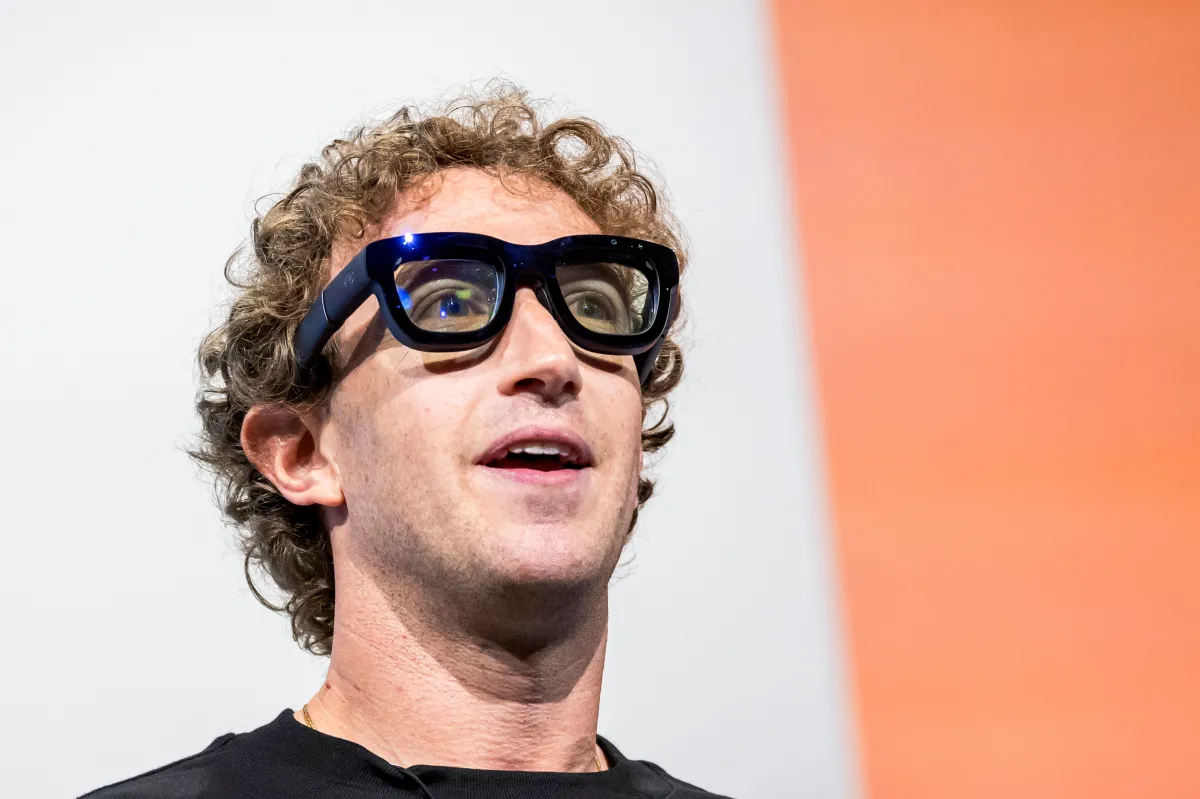
The most ambitious effort so far is the Vanguard smart glasses, launched earlier this month. Yet, they seem more like an extension of Meta’s Reality Labs projects than a major step forward in AI-driven products.
In short, these are promising experiments, not mature products.
So when analysts asked about the company’s massive infrastructure spending, Zuckerberg didn’t point to existing launches but instead talked about what’s next. He highlighted the coming breakthroughs from the Superintelligence Lab, saying he was “excited about building new models and new products” and promised to share more “in the coming months.”
But this was an earnings call — not a product reveal — and investors wanted specifics. The vague assurances didn’t help; the market’s reaction made that clear.
To be fair, Meta only restructured its AI division four months ago, and the new Superintelligence team hasn’t had time to release a breakthrough product. Still, as the company burns through billions to stay competitive, it’s unclear what exact role Zuckerberg envisions for Meta in the evolving AI landscape.
Will Meta AI evolve into a true ChatGPT rival, powered by the company’s massive data stores? Could Vibes mark the start of an AI-driven entertainment platform built on Meta’s ad network? Or do Zuckerberg’s references to “business AI” hint at a pivot toward enterprise solutions?
For now, no one knows. What’s certain is that Meta needs to define its AI strategy soon — before investors lose patience entirely.


